
Index majors NTPC, BHEL, Reliance Reliance Energy, Reliance Communications and HDFC, DLF, TCS, SBI and Bajaj Auto have zoomed.
According to the global financial services major, the primary concern for the RBI at the moment has to be anchoring elevated inflation expectations and stabilising the currency, which could face renewed pressures if the Fed begins QE tapering this week, as widely expected.

The rupee is stable, and a number other of measures have been taken to bring stability in the capital market, the FM said.

With the two latest resignations, 16 MLAs -- 13 from the Congress and 3 from the JD-S -- have quit while two Independent MLAs -- H Nagesh and R Shanker -- have already withdrawn support.

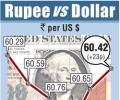
The rupee is likely to strengthen to 60-61 level by this fiscal-end on expectations of improvement in current account deficit (CAD) and higher inflows from overseas investors.

If indeed we want the board to manage the RBI, probably the government should take a close look at the US Federal Reserve system which has a two-part structure - a central authority in Washington, DC, and a decentralised network of 12 Federal Reserve Banks located throughout the country, says Tamal Bandyopadhyay.

Sensex witnessed the biggest single day gain since May 2009 in absolute terms.

The S&P and Dow dipped the most in a day since September 28.

Increased demand from oil importers for the American currency and a weak opening in the domestic stock market also put pressure on the rupee.

The rupee closed at Rs 66.21 in its last trading session.

The flows may stem and redemptions pressure increase following the market meltdown of Monday amid mounting cases of coronavirus infection globally.
In the latest large opinion poll, the opposition Bharatiya Janata Party and its allies were forecast to win a narrow majority in the 543-seat lower house of parliament, compared with previous surveys predicting that they would fall short.

RBI Governor Raghuram Rajan on February 2, left the key interest rate unchanged citing inflation.

The fuzziness of Trump's economic blueprint remains the biggest risk.

A fall presents an opportunity to buy rate-sensitive stocks.
Investors will keenly watch US Fed meet starting Tuesday
At its last policy review, the central bank left policy repo rates on hold at 7.25 percent, tying future cuts to inflation outlook.
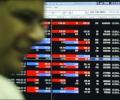
The broader markets ended in line with the benchmark indices- BSE Midcap and Smallcap indices ended higher by 1.3% and 0.9% each.

Experts believe volatility is here to stay for some time, at least till China stabilises and clarity regarding the US Fed's interest rate move emerges.
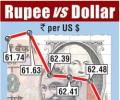
The previous bout of Fed withdrawal fears had threatened to spark a crisis of confidence in India -- sending the rupee to a record low of 68.85 in late August and leading to steep falls in bonds and stocks.

The BSE IT sector, however, failed to snap a three-day losing streak and closed around 0.14 per cent lower.

RBI will review the monetary policy again on September 29.

India Ratings principal economist Sunil Kumar Sinha said the Brexit is a mixed bag for the country.

The US Fed on May 24 hinted at withdrawing its third round of quantitative easing, or bond buying programme, worth $85 billion each month, which began in the wake of the worst credit crisis in September 2008.

A massive outflows of foreign funds on the back of stricter participatory notes and renewed possibility of Fed lifting US interest rates largely impacted the domestic unit.

RBI might not cut rate on June 2 but will surely cut soon.
Who benefits, who loses from the rising rupee, while a boon for travellers and students, exporters may find themselves facing a greater disadvantage.

Political risk culminating from elections in the US and Latin America, and evolving right-wing populism in Europe could lead to substantial volatility, say Abheek Barua & Tushar Arora.
Revising inflation forecast upwards would be positive

The market is clinging to support above the 8,000 mark and hitting resistance above 8,150.

Rupee will weaken against the dollar in next 12 months, says Reuters poll.

'If an investor is ready to stay put for the next five years, one can consider investing in mid- and small-cap funds, but through SIPs.'

Concerns related to capital outflows in the aftermath of the first US interest rate hike in nearly a decade predominantly weighed on the rupee trade.

Gold is often considered a 'hedge' against an economic uncertainty.
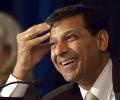
Raghuram Rajan, whose current three-year tenure ends on September 4, has already said no to a second term.

FIIs pump in $1.4 billion in March, after pulling out $2.9 billion in Jan-Feb.

The dollar moved higher, while prices for US government debt fell, as traders ramped up bets the Federal Reserve would raise interest rates in March
